Behaviour & Communication

Reading your dog

Positive training approaches, working through tricky behaviours, and building the kind of trust that makes everything else easier. It all starts with how you and your dog communicate.

A dog trainer in Australia wearing a yellow safety vest holds a treat and an orange lead, training a happy, sitting brown dog in a grassy field. Other people and dogs are visible in the blurred background.
Behaviour & Communication

Finding a Good Dog Trainer in Australia

Dog training in Australia is unregulated, and every guide tells you to evaluate methods. You don’t need to. What matters is knowing what to watch for in the person standing in front of your dog.

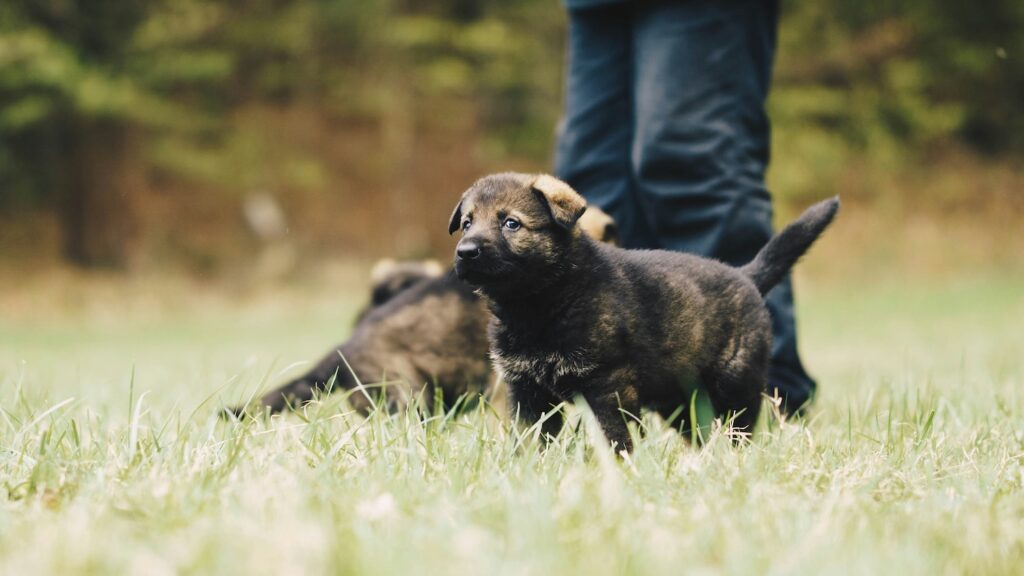
A small German Shepherd puppy stands alert on grass, with another puppy and a person in dark trousers in the background—an adorable glimpse into the joys and challenges of raising littermates outdoors amid blurred greenery.
Behaviour & Communication

Raising Littermates: The Practical Guide for Owners Already in It

You already have two puppies. The advice that says you shouldn’t have is useless now. What matters is what happens next: how to build two individuals under one roof, when to get professional help, and the conversation most guides won’t have.

A brown dog, like many anxious dogs, sits in a green pet bed with a grey towel draped over its head, looking off to the side. A person's hand rests nearby on the bed.
Behaviour & Communication

Building Confidence in Anxious Dogs

Living with an anxious dog comes with a particular kind of tiredness: the mental load, the routes you’ve memorised, the places you’ve stopped going. This isn’t something you did wrong, and it’s not something you have to accept as permanent. The floor can be raised. The world can open up again.

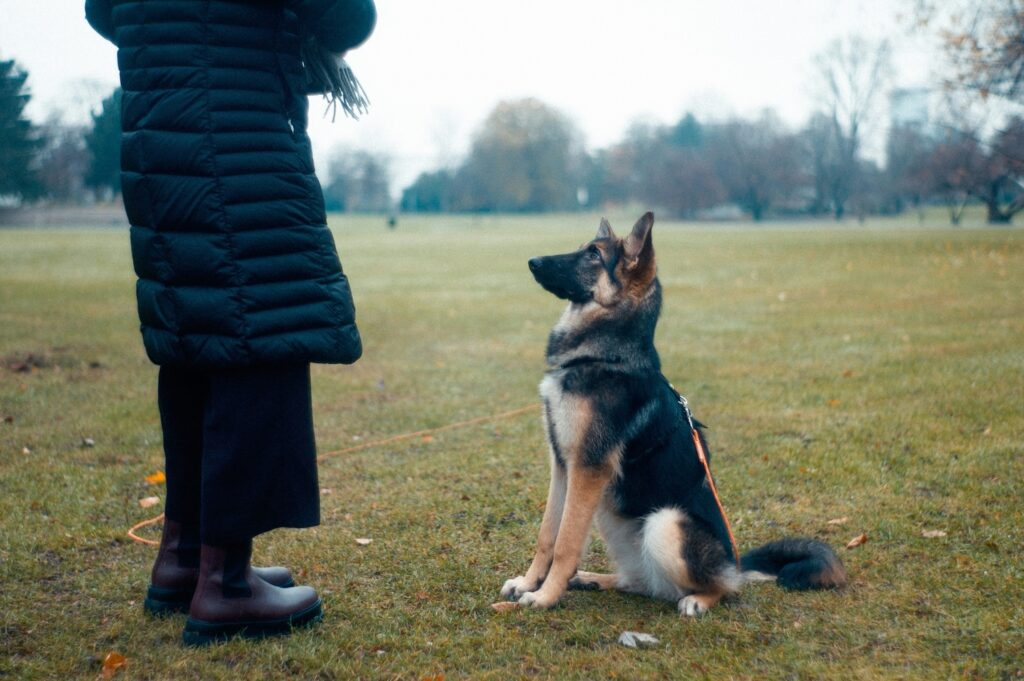
A German Shepherd sits attentively on grass, looking up at a person in a black coat and boots, during an ominance dog training session in a park with trees in the background on a cloudy day.
Behaviour & Communication

What Actually Works Instead of ‘Dominance’

The “alpha dog” concept isn’t just outdated. It’s based on flawed research on captive wolves, not natural pack behaviour. Decades of evidence now show what actually works: approaches built on attachment, trust, and positive reinforcement that are more effective, more reliable, and far kinder.

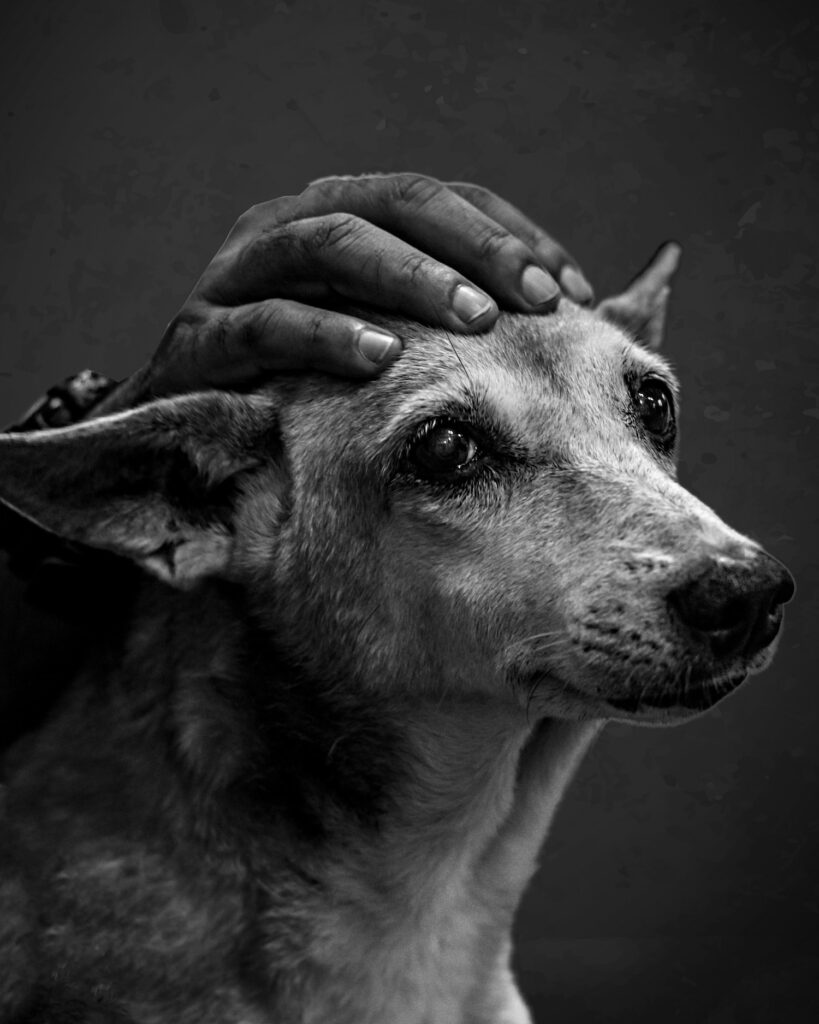
A black and white photo of a dog being gently patted on the head by a person's hand, capturing the dog's calm, soulful expression whilst subtly highlighting dog stress signals in its posture.
Behaviour & Communication

Reading Your Dog’s Stress Signals

Most stress signals happen in flickers: a tongue flick, a turned head, a freeze. By the time they’re obvious, your options are limited. Learning to read early signals gives you time to help.