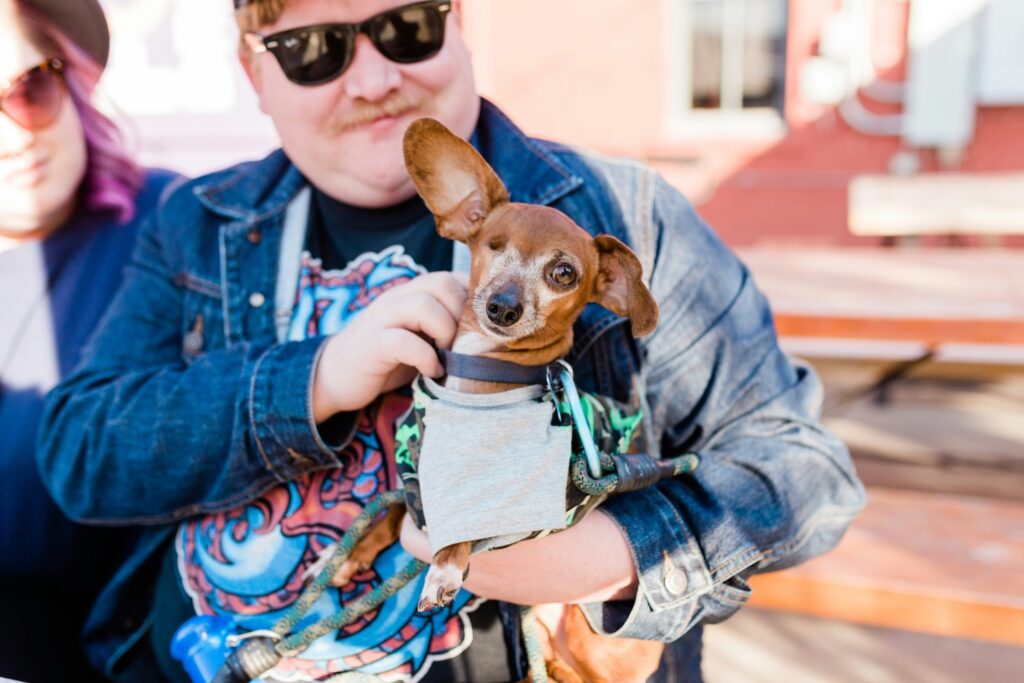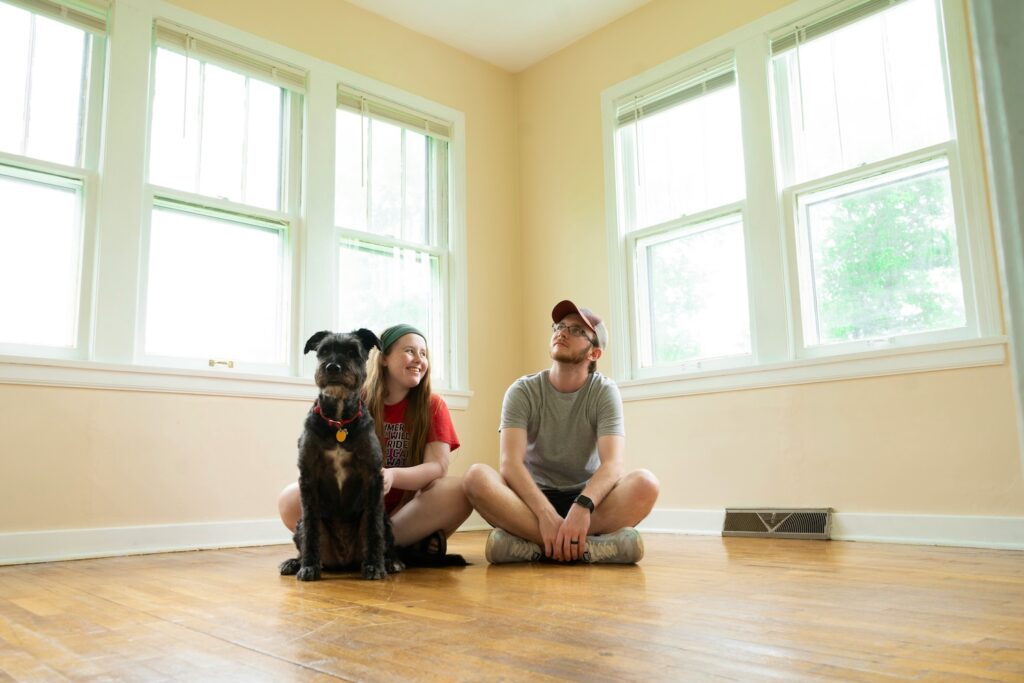
You’ve been picturing the dog for weeks. Calm, cuddly, low-shedding, fits the apartment, suits your hours. The question worth asking before the deposit is whether the dog you’re picturing is the dog you’ll actually live with.
If every other Cavoodle article you’ve opened feels like it’s selling you something, this isn’t that. The question isn’t whether Cavoodles are a good breed. It’s whether your home is the home this dog is built for.
Same breeder, same parents, two completely different dogs
One Cavoodle owner on Reddit described her two puppies. They came from the same breeder, successive litters, same parents. The first one, she wrote, was “asleep in my husband’s work shoe.” The second one was “a velociraptor.”
That’s not a personality quirk. It’s what the breed actually is.
Breeders advertise predictability through parent-pairing. The implied promise is that meeting the parents tells you what the puppy will be like. What owners say they actually got is something else. On Whirlpool and Reddit, the word that keeps coming back is lottery.
A first-generation Cavoodle (one purebred Cavalier crossed with one purebred Poodle) is the most coat-consistent of the lot, because every puppy inherits the same gene pairing from each side. By the second generation, when two first-crosses are bred together, the traits start splitting across the litter. Behavioural traits don’t follow neat single-gene rules, but the same underlying principle holds: visible siblings can carry very different temperaments, inherited from grandparents you’ll never meet. The marketing is selling a population statistic as an individual guarantee.
The biggest study to look at this comes out of the Royal Veterinary College in the UK, where researchers Rowena Packer and Dan O’Neill surveyed the owners of 9,402 dogs. They compared the three biggest designer crossbreeds (Cavoodles, Cockapoos, Labradoodles) against their purebred parent breeds across two dozen behavioural categories. The Cavoodle results landed harder than anyone expected. The breed differed significantly from both its Cavalier and its Poodle progenitors in 12 of those 24 comparisons. In 11 of the 12, Cavoodles scored worse. More problem behaviours, not fewer.
So you can’t pick the calm one by looking at the parents. Some Cavoodles will be exactly the dog the marketing describes. Others will be the velociraptor. Most will land somewhere along the range, and which one you get isn’t something the breeder fully controls, let alone something you can read off the parents.
The home this dog is built for
Two Cavoodle owners, in different threads, captured the breed’s defining trade-off in a sentence each. From one: “The Cavapoo is the best dog for people who work from home or who are home all day.” From another, replying to someone in office work: “If you are going to be gone for long periods every day, this may not be the right kind of dog for you.”
What both owners are describing is the breed’s separation-anxiety profile. Cavoodle owners across multiple independent threads use the same vocabulary for it. Velcro dogs. Drama queens. One owner: “the anxiety can get very very bad, very very fast.” The range goes from manageable with crate training, to two years before the dog properly settles, to anti-anxiety medication. The same RVC study that tracked the behavioural variance flagged separation anxiety as one of the categories where Cavoodles scored higher than their parent breeds. The owner forums and the veterinary literature are looking at the same dog.
On a 2019 Whirlpool thread, the original poster admitted the puppy “will unfortunately be alone for at least 7 hours on worst case days.” A Sydney owner posted to r/puppy101 about a 14-week-old Cavoodle who had settled in fine for six weeks, then started *”throwing himself against the playpen walls”* while the owners were at work. “We work 8 hours a day…honestly no idea what to do anymore.”
The home this dog is built for is one with people in it. Not all the time. But often, predictably, and with the rhythms shaped around the dog’s separation tolerance rather than against it. That can be a work-from-home setup. It can be a home where someone’s retired, or studying from home, or working part-time, or where two adults stagger their hours so the dog is rarely alone for long. What it isn’t is two full-time office workers and a puppy holding the fort.
The test isn’t whether you love the dog, or whether your partner has already picked one out. The test is whether the home you’d be bringing them into looks like the home this dog needs.
The coat is also a lottery
“It’s a bit of a lottery if you get what you’re hoping for.” That was one Whirlpool poster on coat type, in 2019. The variance reaches into the visible too.
A first-generation Cavoodle inherits a wavy, fleecy coat that’s mostly consistent across the litter. An F1b (a first-cross backcrossed to a Poodle) usually shifts toward curlier and lower-shedding, but with daily brushing required to keep it from matting. Colour is its own surprise: somewhere around 80 per cent of Cavoodles fade significantly by age two, so the chocolate-and-tan puppy in the photos becomes a pale-cream adult.
Daily brushing is the part most prospective owners underweight. Keeping a longer coat tangle-free is real, daily work on any dog, and Cavoodle coats are harder than most. Skip a few days and the matting starts close to the skin where you can’t easily get to it; skip a week and you’re at the groomer paying to shave it off. Australian professional grooming sits around $110 to $160 every six to eight weeks (Doggy Dayspa, Blue Wheelers, and Greencross all in that range).
One question to ask before you pay the deposit
The Reddit owner with the velociraptor and the work-shoe-sleeper had one piece of advice for anyone heading into a Cavoodle deposit. The parents won’t tell you which puppy you’re getting, but the breeder might. “I recommend you speak to the breeder and you ask them to select the most docile one from the litter.”
The question itself isn’t the test. Most breeders will say yes. What the question is testing is whether the breeder is observing the litter at all.
A breeder who can describe each puppy’s temperament across the first eight weeks (the velociraptor, the work-shoe-sleeper, the one in the middle who gets bored fast, the one who follows the human into every room) is doing the observation that matched allocation actually requires. A breeder whose answer collapses to “they’re all wonderful” or “we’ll just give you whoever’s left when it’s your turn” is allocating by deposit order, not by fit.
What you’re listening for is whether the breeder talks about the puppies as individuals. That’s the signal they’ve spent the eight weeks watching.
Where this leaves you
You can still proceed. Plenty of Cavoodles land in the home they were built for and grow into the dog the marketing promised. Nothing here argues you shouldn’t be one of those owners.
You can also defer. That might mean a year of work-life adjustment before you commit, getting onto a breeder’s waitlist without leaving a deposit, or finding the kind of living setup this dog actually needs before you bring one home.
Or you can choose differently. Plenty of breeds were built for households with people gone all day; the honest question isn’t which breed should I get but which breeds were bred for the life I’m actually living. A different breed for a different home is a good outcome too.
What changes, if anything has, is what you’re carrying into the choice. Not whether Cavoodles are a good breed. What their actual range is, what your home is actually shaped like, and what to ask the breeder before you sign anything.