Table of Contents
You’ve done everything right. The quality food. The morning walks. The training classes. And still, something’s off. Your dog startles at sounds they used to ignore. They can’t settle in the evening, pacing between rooms while you’re trying to wind down. Commands that used to land first time now take three or four attempts. You’re starting to wonder if you’re missing something obvious.
You probably are. But it’s not what you think.
Most of the problems that look like training issues, behaviour quirks, or even early health concerns trace back to something far more fundamental: sleep. Not exercise. Not diet. Not your training technique. The thing that sits underneath everything else, quietly shaping your dog’s capacity to cope with their day.
The frustrating part? Sleep problems in dogs rarely look like sleep problems. They look like a dog who’s become difficult.
When Tiredness Doesn’t Look Like Tiredness
Most owners never see the paradox: a dog who isn’t sleeping well often becomes more active, not less.
Logic says a tired dog should be calm and lethargic. But many sleep-deprived dogs become hyperactive instead. They pace. They bark at nothing. They chew things they know are forbidden. This isn’t defiance. It’s their nervous system trying to compensate for exhaustion, the same way an overtired toddler melts down rather than falling asleep.
The early signals are subtle: frequent yawning when they’re not tired, lip licking without food present, an inability to settle in one spot. You might notice your dog constantly changing positions, seeming fidgety when they should be relaxed.
Sleep problems in dogs rarely look like sleep problems. They look like a dog who’s become difficult.
Over time, the signs become harder to miss. Irritability creeps in. They snap at situations they’d normally tolerate. Their reactivity threshold drops. Sounds they used to ignore now trigger barking. Their impulse control frays. You find yourself saying “they’re not usually like this” more often than feels normal.
The cognitive impacts hit training directly. A dog struggling with recall or position holds might not need more repetition. They might need better sleep to consolidate what they’re already learning. Their brain simply can’t do the filing work if it never gets the downtime.
Physical signs appear too: clumsiness, poor coordination, increased appetite, daytime lethargy that doesn’t match their overnight rest. If your normally coordinated dog starts tripping over their own feet or misjudging jumps, exhaustion might be the culprit.
What’s Actually Happening When Your Dog Sleeps
Your dog’s sleep looks nothing like yours, and understanding this difference explains why small disruptions matter so much.
You consolidate rest into one long nighttime block. Dogs are polyphasic sleepers. They take multiple shorter bouts of sleep and wakefulness across 24 hours. This isn’t a design flaw. It’s an evolutionary advantage that let their ancestors rest while staying alert to threats.
A healthy adult dog spends about 50% of their day genuinely asleep, 30% awake but quietly relaxed, and only 20% actively engaged with the world. That’s a lot of rest. And their sleep cycles are much shorter than ours: about 45 minutes compared to our 70 to 120 minutes, which means they can complete several full cycles even during a short nap.
The sleep itself serves two distinct purposes. Deep sleep handles physical restoration: tissue repair, immune function, growth hormone release. REM sleep, where you’ll see the twitching and paddling and soft vocalisations, handles memory consolidation and emotional processing. Unlike humans, dogs don’t experience complete muscle paralysis during REM, which is why they literally act out their dreams.
What makes canine sleep particularly vulnerable is their inherited vigilance. Even while sleeping, their sensory systems remain more attuned than ours. A sound that barely registers to you might be enough to fragment their sleep cycle before they reach the restorative stages they need. Each disruption pulls them back toward wakefulness: the delivery truck, a door closing, the television in the next room.
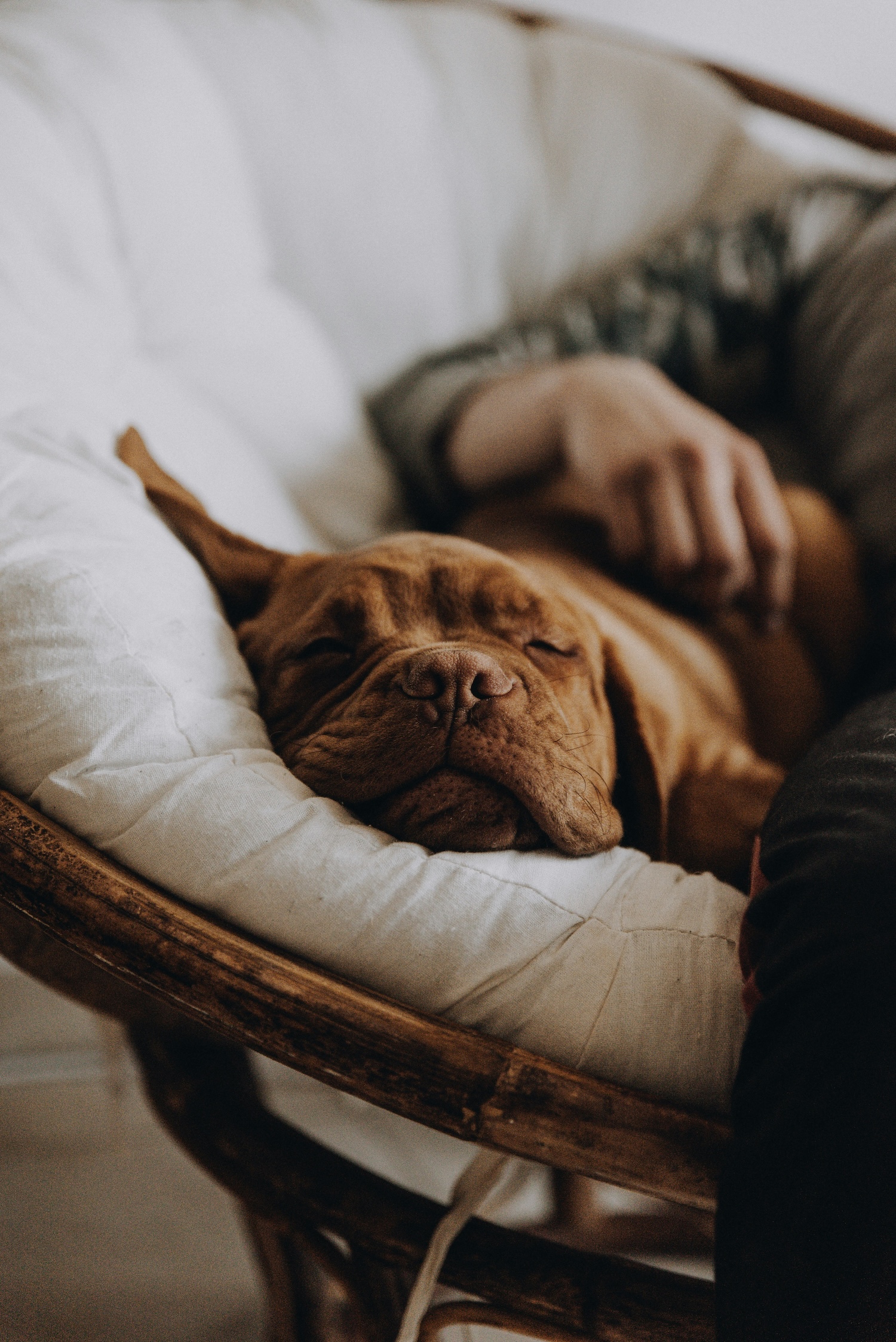
This is why environment matters so much. A dog dozing in a busy room with people stepping over them isn’t getting the same recovery as a dog sleeping undisturbed in their own space.
The Age Factor
Sleep needs change dramatically across your dog’s life, and misreading these needs is common.
Puppies need 18 to 20 hours daily. This isn’t laziness. Growth hormone releases predominantly during deep sleep. Their developing brains use sleep time to process the enormous amount of new information they encounter, forming the neural connections that will shape their adult temperament. A puppy who isn’t sleeping enough isn’t just tired. They’re potentially compromising their development.
Adult dogs typically need 12 to 14 hours distributed across nighttime sleep and daytime naps. This varies with size, breed, and activity level. Larger breeds often need more sleep than smaller ones due to higher metabolic costs. Dogs with demanding exercise routines need additional rest for muscle recovery.
Senior dogs need 14 to 20 hours but often experience more fragmented patterns. They may sleep more during the day while becoming restless at night. This can be normal ageing, but it can also signal underlying issues: joint pain that makes positions uncomfortable, or cognitive changes that disrupt sleep-wake cycles. If your older dog’s sleep patterns shift suddenly, that’s worth a vet conversation.
Your Most Powerful Tool: The Wind-Down Ritual
Before you invest in beds or supplements or sound machines, start here. A predictable evening routine that signals the transition to rest can transform your dog’s sleep quality, and it costs nothing.
Starting 30 minutes before intended sleep time, cease all stimulating activity. No more fetch, training, or exciting play. Take a final toilet opportunity, kept calm, boring, and on-lead if needed. Dim household lights to support natural melatonin production. Offer gentle interaction like calm petting if your dog enjoys it. Use a consistent phrase (“Time to settle” or whatever feels natural) to mark the transition.
The power isn’t in any single element. It’s in the predictability. After two weeks, most dogs start showing relaxation responses at the first step. Their brain recognises the pattern and begins physiological preparation for sleep before you’ve even reached the final cue.
A predictable wind-down ritual costs nothing and often delivers more than any product you could buy.
This is the intervention I’d recommend starting tonight, regardless of what else you do. It’s low effort, no cost, and creates the foundation that makes everything else work better.
Setting Up Their Sleep Environment
Once the ritual is established, environment becomes the next lever. Prioritise your efforts where they’ll deliver the biggest impact.
Sound Management
This delivers the most benefit for most households. Dogs’ inherited vigilance makes them particularly sensitive to auditory disturbances during sleep. A white noise machine or simple fan masks disruptive external sounds, providing a consistent auditory backdrop that allows their brain to disengage from monitoring.
Temperature
Most dogs sleep best between 15°C and 25°C, though this varies by coat and individual preference. Rather than fixating on numbers, observe behaviour: panting and restlessness suggest overheating, while shivering or tight curling indicates cold.
The Bed Itself
A quality sleeping surface functions as health equipment, not just furniture. Look for adequate orthopaedic support, particularly for larger dogs or those with joint issues. Memory foam with sufficient thickness (at least 8 to 10cm for large dogs) and enough size to allow full stretching.
For senior dogs or those with arthritis, the bed becomes therapeutic. An orthopaedic surface can mean the difference between painful nights that increase inflammation and restorative rest that helps manage chronic conditions.
Location
Choose quiet, low-traffic areas away from main thoroughfares and noisy appliances. Many dogs instinctively seek den-like spaces. A crate with the door open, a bed with high sides, or a corner spot satisfies this need for security. The key is that they can access it freely and aren’t disturbed once they’re there.
Light
Darkness supports natural melatonin production. You don’t need pitch-black conditions, but dimming overhead lights and positioning beds away from active screens helps signal rest time. This matters more in summer when daylight extends late.
Why Sleep Makes Training Work Better
One of the most practical applications of sleep science: it explains why some training clicks and some doesn’t.
During sleep, particularly during deep sleep, your dog’s brain literally replays neural patterns from the day’s experiences. Studies using EEG technology have identified “sleep spindles,” powerful bursts of brain activity lasting about half a second. Dogs showing more sleep spindles after training perform significantly better on subsequent tests.
This suggests a different approach to training than pushing through long sessions. Short, focused practice of 10 to 15 minutes, followed by quiet rest or a nap, then a subsequent session to reinforce what was learned.
The problem with many training plateaus isn’t the method or your dog’s intelligence. It’s simply lack of opportunity for their brain to do its consolidation work during sleep. A well-timed nap after learning can be more effective than pushing through additional repetitions with a fatigued brain.
When Improvement Happens
If you implement sleep interventions, understanding the actual timeline helps maintain consistency through the process.
Days 1 to 7: You might notice slightly less reactivity, a moment’s hesitation before reacting to triggers. The changes are subtle but foundational. Your dog’s nervous system is beginning to downregulate.
Days 8 to 14: Training sessions start feeling different. Commands that were inconsistent become more reliable. This is when the brain starts getting enough complete sleep cycles to properly consolidate learning.
Days 15 to 30: Emotional regulation stabilises significantly. The neurochemistry that governs mood and impulse control is rebalancing. You’re not just waiting for your dog to “catch up” on sleep. You’re allowing time for their brain to restructure how it responds to the world.
Don’t expect dramatic transformation. Expect gradual shifts that compound over time.
When Sleep Problems Need Veterinary Attention
While environment and routine resolve many sleep issues, some changes warrant professional input.
Loud, chronic snoring with gasping warrants attention, particularly in breeds that don’t have flat faces. So does new nighttime restlessness with pacing or crying, sudden collapse or “sleep attacks” during the day, and violent movements during sleep that go beyond normal dream twitching.
Chronic pain is one of the most common culprits of poor sleep, particularly in senior dogs. Arthritis, dental disease, or gastrointestinal discomfort can make it impossible to find and maintain comfortable resting positions.
Canine cognitive dysfunction often presents first as disrupted sleep-wake cycles. Affected dogs may sleep more during the day while spending nights awake, restless, and distressed, often pacing and vocalising.
Any sleep changes accompanied by other symptoms (altered appetite, weight changes, increased thirst, vomiting, or diarrhoea) require prompt veterinary evaluation.
Start Tonight
You started reading this because something felt off with your dog. They’re harder to live with than they used to be. Training isn’t landing. They seem on edge.
Sleep might not be the whole answer. But it’s often the answer you haven’t tried yet, because it’s the one that doesn’t occur to people. We think about exercise and diet and training and enrichment. We forget the thing that makes all of those work.
Tonight, try a 30-minute wind-down ritual. Nothing else needs to change yet. Just create that predictable transition to sleep: activity stops, lights dim, the same phrase marks the shift. Do it for two weeks. Track what you observe.
The dog who can’t settle, who startles too easily, who seems perpetually on edge, they’re doing their best with a nervous system that never gets to fully reset. You can’t train your way past exhaustion. But you can give them the conditions where rest actually happens.
That’s where everything else starts.